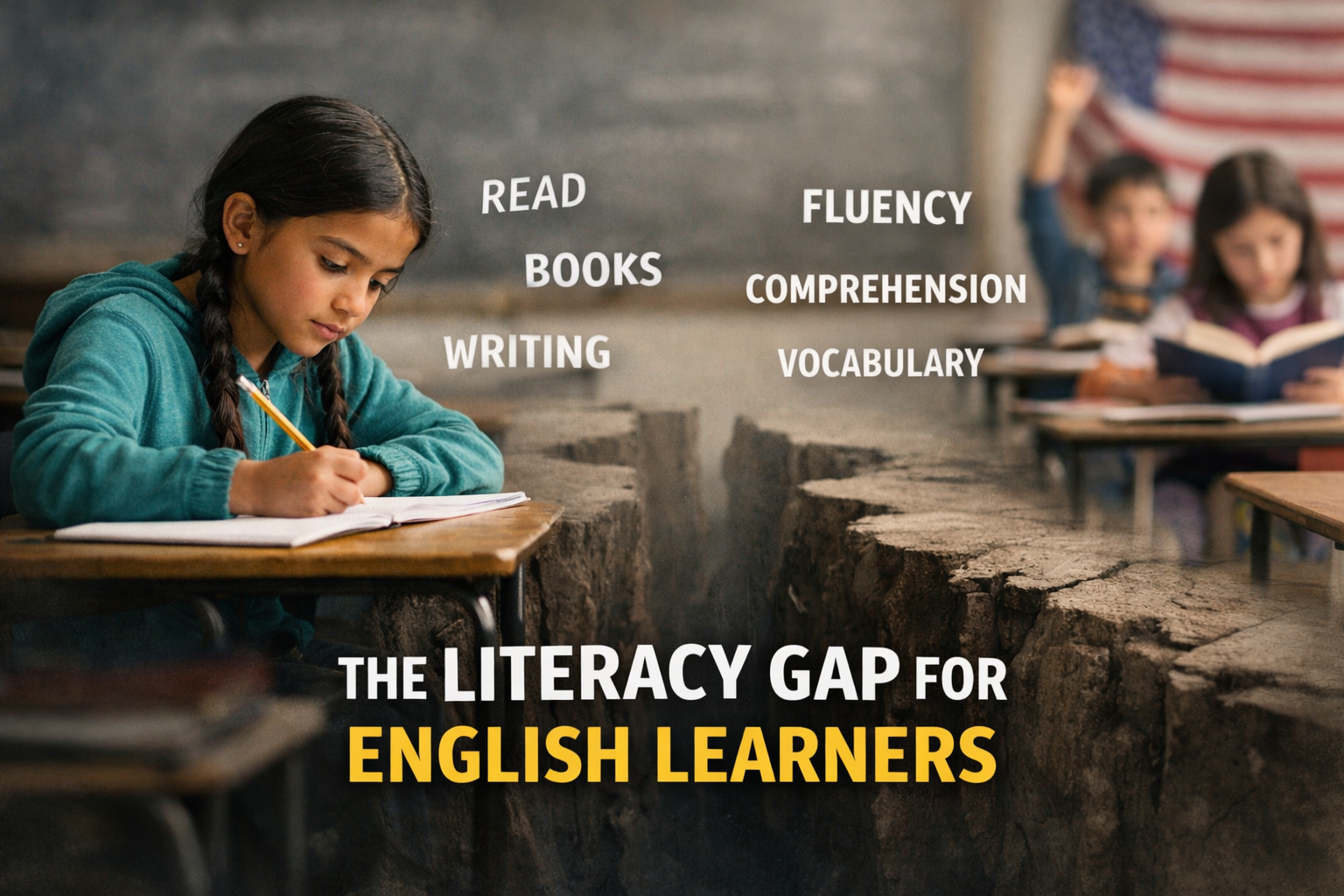
 The silent literacy gap that districts can’t ignore for English Learners is becoming increasingly visible as districts examine literacy data and equity outcomes. While schools invest heavily in curriculum, assessments, and intervention programs, one of the most influential factors in literacy development often receives far less attention: consistent support at home.
English learners spend significantly more time outside the classroom than inside it. When literacy instruction ends at dismissal, reading growth often slows—especially for students still developing English vocabulary, fluency, and comprehension. This gap between school instruction and home support contributes to uneven literacy outcomes that classroom-based efforts alone cannot fully resolve.
The issue is not family motivation. Spanish-speaking families consistently demonstrate strong commitment to their children’s education. Many already engage in rich oral language practices, storytelling, and shared reading in their home language. Research highlighted by organizations such as The Latino Family Literacy Project shows that home literacy experiences play a critical role in long-term reading success for multilingual learners.
What families often lack are clear, culturally aligned tools that help them support English literacy with confidence. Parents may want to read English books with their children but feel unsure how to pronounce unfamiliar words, ask comprehension questions, or reinforce vocabulary. Without guidance, even motivated families may disengage—creating a silent disconnect between school and home.
Family literacy programs for English learners are designed to bridge this gap by extending literacy instruction beyond the classroom in structured, supportive ways. Effective programs typically:
• Build English vocabulary through guided shared reading
• Use culturally relevant books that reflect students’ experiences
• Empower parents as active literacy partners
• Reinforce classroom instruction without adding pressure
Publishers such as Lectura Books provide family literacy resources specifically developed for bilingual and multilingual families. When families feel prepared and respected, literacy practice becomes consistent, meaningful, and engaging.
A common question districts ask is whether family literacy programs are effective for English learners. Our university-tested and implementation experience show that when programs are structured, culturally aligned, and easy to use, they strengthen reading development while improving family engagement and school–home relationships.